The Evolution of API Gateways in Managing Microservice Communications Within Enterprise Logistics Platforms
Written by Katja Griffin · Oct 16, 2026
The Evolution of API Gateways in Managing Microservice Communications Within Enterprise Logistics Platforms
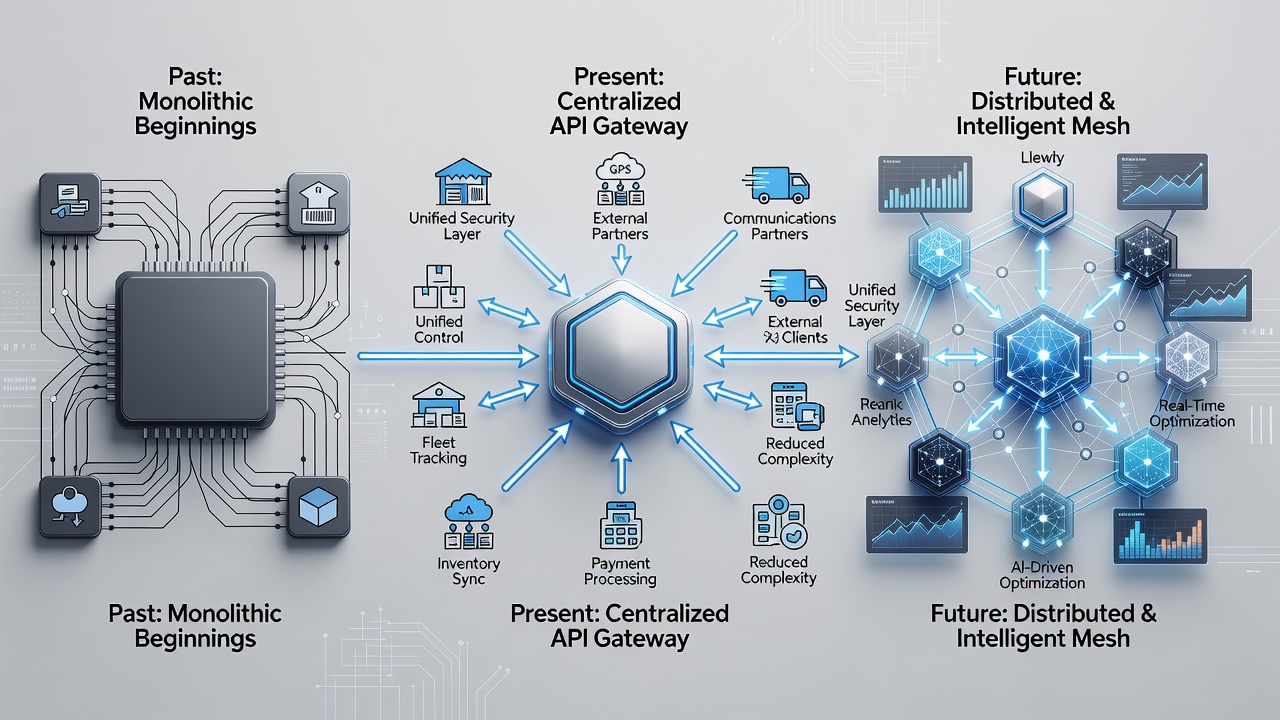
Enterprise logistics platforms began transitioning from monolithic applications to microservices architectures around the early 2010s, when companies sought greater flexibility in handling complex operations like real-time shipment tracking, warehouse inventory updates, and supply chain coordination across global networks. This change created new demands for managing communications between independent services, and API gateways emerged as central components that route requests, enforce security policies, and aggregate responses without requiring each microservice to handle those tasks individually.
Initial API gateways focused on basic proxy functions such as load balancing and simple authentication, yet logistics operators quickly required more as their systems expanded to include IoT sensors on cargo containers and predictive analytics engines. Data indicates that by 2018 many platforms had adopted gateways supporting rate limiting and circuit breaking to prevent cascading failures during peak shipping seasons. Observers note that these features proved essential when microservices multiplied to cover specialized functions including customs documentation processing and last-mile delivery optimization.
Key Developments Through the 2020s
The 2020s saw API gateways incorporate advanced capabilities like service mesh integration and support for event-driven architectures, which logistics firms used to synchronize data across distributed teams and external partners. Researchers discovered that gateways equipped with built-in observability tools allowed operators to monitor latency in cross-border shipment data flows more effectively than before. And while earlier versions handled HTTP traffic primarily, newer iterations added native support for protocols such as gRPC and MQTT to accommodate sensor networks and automated guided vehicles in fulfillment centers.
By October 2026, adoption statistics from industry reports show that over 70 percent of large-scale logistics platforms relied on API gateways with embedded policy engines for compliance with regional data regulations, including those from the European Union and Australian authorities. These gateways performed transformations on payloads in real time, converting legacy EDI formats into modern JSON structures while maintaining audit trails required for international trade documentation.
Security and Scalability Enhancements
Security layers within API gateways evolved to address vulnerabilities unique to logistics environments, where services exchange sensitive details on cargo contents and customer locations. Experts have observed that features such as mutual TLS authentication and dynamic token validation became standard after high-profile incidents involving unauthorized access to tracking databases. Platforms integrated gateways with identity providers to manage permissions across third-party carriers and customs brokers, reducing the attack surface compared to direct service-to-service calls.
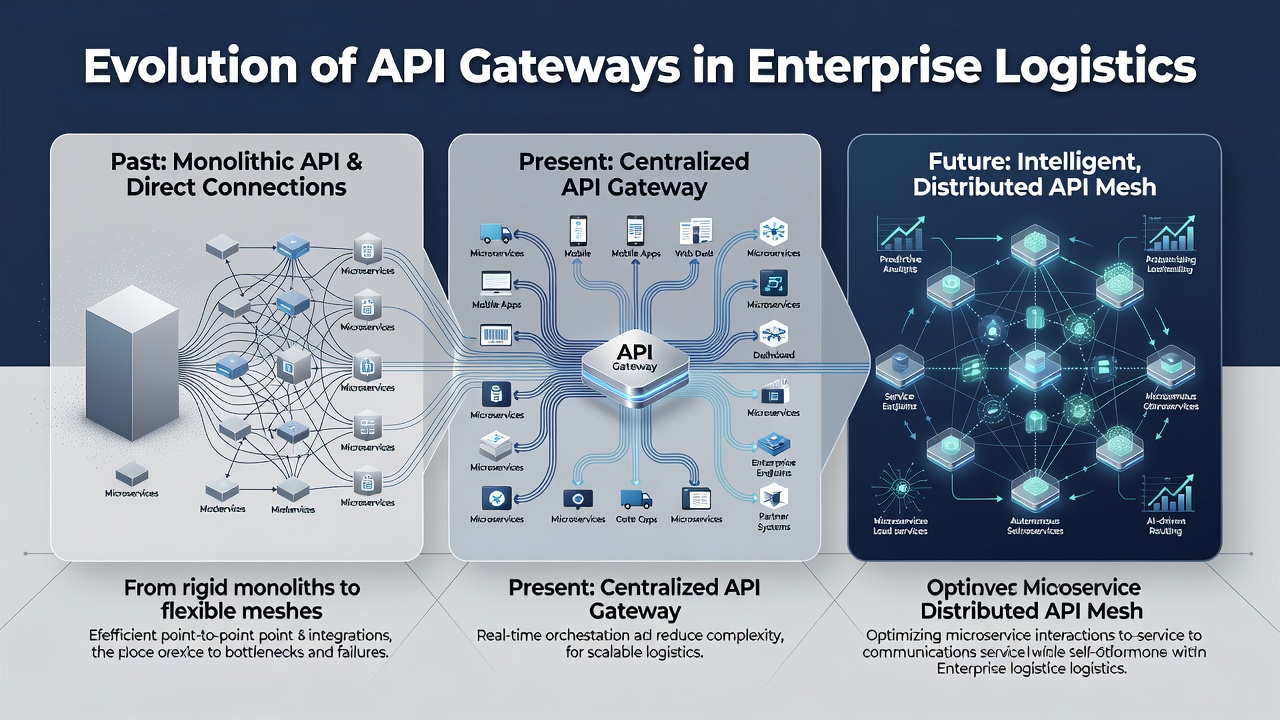
Scalability improvements arrived through horizontal gateway clustering and edge deployment models, allowing logistics operators to position instances closer to regional hubs in Asia and North America. According to Cloud Native Computing Foundation analyses, these configurations handled traffic spikes during holiday periods without degradation, while maintaining consistent performance for core functions like route optimization algorithms. The reality is that gateways also began supporting A/B testing of new microservice versions, enabling gradual rollouts that minimized disruptions to ongoing delivery operations.
Integration With Emerging Technologies
Integration with AI-driven components marked another phase, where gateways started routing inference requests to on-premise accelerators for tasks such as demand forecasting and anomaly detection in supply chains. Those who've studied deployments note that this setup reduced round-trip times for time-sensitive logistics decisions by keeping processing local rather than relying solely on central clouds. Government data from transport agencies in Canada and the United Kingdom further highlights how standardized gateway interfaces facilitated interoperability between different vendors' microservices in multi-modal freight systems.
Configuration management advanced with declarative APIs and GitOps workflows, letting teams version-control gateway policies alongside application code. This approach proved valuable in environments where frequent updates to routing rules were needed to adapt to changing trade tariffs or port congestion patterns. Studies found that automated policy propagation across gateway clusters cut deployment times from hours to minutes in several documented cases.
Conclusion
The progression of API gateways in enterprise logistics reflects broader shifts toward distributed systems that prioritize reliability, security, and adaptability. From basic traffic management to sophisticated orchestration layers supporting regulatory compliance and emerging protocols, these components have become foundational for microservice ecosystems handling the intricacies of global supply chains. Continued refinement in areas such as zero-trust models and protocol extensibility points to sustained relevance as platforms scale further into 2026 and beyond.